Friday, April 8, 2016

How To Treat Dry Eyes Caused by Allergies

Treatments for Dry Eyes Caused by Allergies.  


Allergy Dry Eyes


About 30 percent to 50 percent of U.S. residents have allergy symptoms. Nearly 75 percent of those allergy symptoms affect the eyes.  In other parts of the world where the weather is dry, dusty and pollution is high, this statistics may even be higher.  Allergies can trigger other problems, such as conjunctivitis - pink eye(see section on red eyes) and asthma. 

Symptoms of Allergy Dry Eyes:

Symptoms of Dry Eyes and Allergy are often confused due to their similarities.  For patients with existing dry eye conditions, allergies during spring and fall where pollen count is high become even more severe.

Some of the common symptoms are:
  • Red, swollen or itchy eyes – similar to dry eye symptoms
  • Runny nose; sneezing; coughing
  • Itchy nose, mouth or throat
  • Headache from sinus congestion
  • Fatigue from lack of sleep.
Allergy in additional to dry eyes often are presented with stronger symptoms of dry; itchy; red and watery eyes.  Itchy eyes are normally a result from allergy rather than classical dry eye conditions.  Some people have both symptoms all year around.  TheraLifeâ Eye Enhanced has natural botanical ingredients that relieve both Dry Eyes and Allergy Eyes.

Causes of Allergy Dry Eye

Most allergens (agents that elicit allergy symptoms) are in the air, where they come in contact with your eyes and nose. Airborne allergens include pollen, mold, dust and pet dander (cats and dogs in particular).  Some allergens like dust mites are embedded into carpets, drapery, bedding and window visors.  In that case, the allergens are triggering allergy and dry eyes all year round.  

Conventional Treatments for Allergy Dry Eyes:

o   The most common treatment for allergy is anti-histamines for quick relief.  However anti-histamines cause dehydration, sleepiness, sometimes dizziness, and often are the causes for Dry Eyes.
o   Decongestant eye drops-, which constricts blood vessels in your eye to take the red out.  Long-term use can cause your eyes to become dependant on these eye drops, and when you stop, the blood vessels become even larger, making red eyes worse.
o   Non-steroidal anti-inflammatory drops can sooth allergy eyes (e.g. Pentanol).  Its effect is longer term than anti-histamines.  It is effective in treating allergy eyes, but not dry eyes.
o   Prescription steroidal eye drops provide quick relief.  However, long term use have been associated with side effects such as increased inner eye pressure (intraocular pressure) leading to glaucoma and damage to optic nerve. Steroids also have been known to cause cataracts. Prescription steroid eye drops are normally used for very severe cases and no longer than one month.
Recommendations


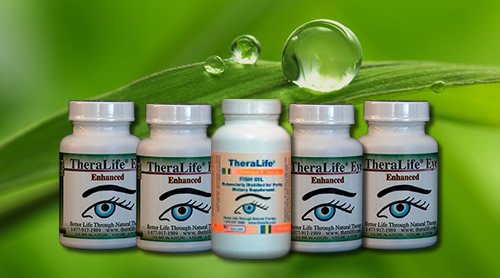
One month supply including 4 bottles of Theralife Eye + 1 bottle of  Fish Oil.
Retail $124.85, discount price $115.85
.  You Save $ 9.

1. TheraLife
â Eye Enhanced?

TheraLife Eye Enhanced is an all-natural botanical product that does not have some of the side effects of anti-histamines (dehydration, dizziness, fatigue and Dry Eyes) or drugs.  TheraLifeâ Eye Enhanced has ingredients that relief symptoms of Allergy Eyes as well as Dry Eyes.  


For more information, see TheraLifeâ Dry Eye Benefits below:
1.  Allergy medications- we recommend Claritin – a mast cell stabilizer.
2.  Use a Hepa filter air cleaner
3. Leave outer clothing and shoes outside before coming into the house to avoid tracking allergens indoors.

DO NOT USE ANTIHISTAMINES – e.g. Benydryl, Claritin D 

Call and talk to a doctor 1-877-917-1989 US/Canada
International 650-949-6080 
email to: info@theralife.com

Follow us on twitter and facebook


Dry Eye Syndrome and Allergies- Medications

Dry Eye Syndrome and Allergy- Causes, Symptoms and Treatment -


The number of people has allergies or asthma is one in five!  Allergies in Dry Eye patients are particularly annoying. 

Symptoms of Allergy Dry Eyes


People with allergies can present themselves with itchy, red, watery and dry eyes. They often complain of having a constant cold.  Chronic dry eye is often associated with ocular allergy.  Want to know what medications are prescribed and how the doctors diagnose ocular allergies and more?  Read on - - - -

Allergy in the United States is very common and is considered a systemic condition that is treatable.  About one third of the patients who has allergies are not aware they have this condition.  Patients who suspect they suffer from allergies usually first visit their family practitioner, who may refer them to an allergist. These patients often end up taking an oral systemic medication, and treatment often leads to chronic dry eye, glaucoma and more eye issues.

Why your allergist and eye doctors should work as a team.


Although allergy also affects the eyes, systemic antihistamines are partially effective at alleviating ocular symptoms (e.g. itching and redness), and they have also been shown to contribute to secondary dry eye problems. Allergists and general practitioners tend to lack slit lamps, which can provide more information regarding ocular health. Optometrists and ophthalmologist are an integral care to both identify and manage ocular surface problems.
Many of your optometrists or ophthalmologists can refer you to an allergist. They should work as an integral team for this wide spread problem.

What kind of symptoms do allergy patients exhibit?

Patients, who have allergies, though don't know it, often have this symptom:
  1. Recurrent cold” that occurs around the same time every year,
  2. Profound Itchy- how this is different than dry eye.
    Exhibit a papillary conjunctiva reaction that is not always present in patients who have dry eye – they will complain of profound itching. “You can have some level of itching with dry eye, but its hallmarks are more the foreign body sensation, grittiness, discomfort and reflex tearing. And usually with allergy, there is more redness in the eye.”
  3. Lower lids may reveal dark half circles. This swelling and discoloration is indicative of allergy.
  4. Constantly rubbing nose up and down.

Allergy and Glaucoma:

Allergists are aware that some allergy medications can cause the pupil to dilate and prompt angle-closure attacks in patients who have very narrow angles or un-diagnosed angle-closure glaucoma, building up intra-ocular pressure.

Allergy and Chronic Dry Eyes. 
Many of these patients and those patients being treated for systemic allergies are at risk for concomitant dry eye, as several OTC drugs contain preservatives that put patients at risk for this condition.  During the patient exam, the eye doctor can be on the lookout for any signs of ocular dryness, via slit lamp exam.
What Prescription Medications are used to treat Allergy?

Intranasal Corticosteroids for Ocular Allergy- Veramust ( GlaxoSmithKline)
Prescription Ocular Allergy Drugs
► Alcaftadine 0.25% (Lastacaft, Allergan) Age of use: two years +, Dosing: q.d.
► Azelastine hydrochloride 0.05% (Optivar, Meda) Age of use: three years +, Dosing: b.i.d.
► Bepotastine besilate 1.5% (Bepreve, ISTA Pharmaceuticals) Age of use: two years, + Dosing: b.i.d.
► Cromolyn sodium 4% (Opticrom, Allergan) Age of use: four years +, Dosing: q.i.d.
► Emedastine difumarate 0.05% (Emadine, Meda) Age of use: three years +, Dosing: q.i.d.
► Epinastine HCI 0.05% (Elestat, Allergan) Age of use: three years +, Dosing: b.i.d.
► Lodoxamide tromethamine 0.1% (Alomide, Alcon) Age of use: two years +, Dosing: q.i.d.
► Loteprednol etabonate 0.2% (Alrex, Bausch + Lomb) Age of use: Safety and effectiveness in children has not been established. Dosing q.i.d.
► Loteprednol etabonate 0.5% (Lotemax, Bausch + Lomb) Age of use: Safety and effectiveness in pediatric patients have not been established. Dosing: q.i.d.
► Nedocromil sodium 2% (Alocril, Allergan) Age of use: three years +, Dosing: b.i.d.
► Olopatadine hydrochloride 0.2% (Pataday, Alcon) Age of use: two years +, Dosing: q.d.
► Olopatadine hydrochloride 0.1% (Patanol, Alcon) Age of use: three years +, Dosing: b.i.d.
► Pemirolast potassium 0.1% (Alamast, Vistakon Pharmaceuticals, LLC)Age of use: three years +, Dosing: q.i.d.* Be sure to check these drugs for their individual preservative amounts. Which makes dry eye symptoms worse.


    How TheraLife Eye can help!


    Why TheraLifeâ Eye Enhanced?
    TheraLife Eye Enhanced treats both dry eye and ocular allergies.  You are getting 2 benefits in one pill.
    TheraLife Eye is an all-natural botanical product that does not have some of the side effects of anti-histamines (dehydration, dizziness, fatigue and Dry Eyes) or drugs.  TheraLifeâ Eye Enhanced has ingredients that relieve symptoms of Allergy Eyes as well as Dry Eyes.

    For more information, see TheraLifeâ Dry Eye Benefits below:
    1.  Allergy medications- we recommend Claritin – a mast cell stabilizer.
    2.  Use a Hepa filter air cleaner
    3. Leave outer clothing and shoes outside before coming into the house to avoid tracking allergens indoors.
    DO NOT USE ANTIHISTAMINES – e.g. Benydryl, Claritin D

    For additional information; please visit National Eye Institute:  nei.gov/

    Learn More


    Visit Our Store


    Want to talk to a doctor; call toll free  1-877-917-1989
    International (650) 949-6080
    or email to info@theralife.com
    Follow us at twitter and facebook

    References and Publications. 
    1. 1. Spangler DL, Abelson MB, Ober A, Gomes PJ. Randomized, double-masked comparison of olopatadine ophthalmic solution, mometasone furoate monohydrate nasal spray, and fexofenadine hydrochloride tablets using the conjunctival and nasal allergen challenge models. Clin Ther. 2003 Aug;25(8): 2245-2267.
      2. Abelson MB, Welch DL. An evaluation of onset and duration of action of Patanol (olopatadine hydrochloride ophthalmic solution 0.1%) compared to Claritin (loratadine 10 mg) tablets in acute allergic conjunctivitis in the conjunctival allergen challenge model. Acta Ophthalmol Scand Suppl. 2000;(230): 60-63.
      3. Ouslter GW, Workman DA, Torkildsen GL. An open-label, investigator masked, crossover study of the ocular drying effects of two antihistamines, topical epinastine and systemic loratadine, in adult volunteers with seasonal allergic conjunctivitis. Clin Ther 2007 Apr;29(4): 611-616.
      4. Pew Internet and American Life Project. Fox S. The Social Life of Health Information, 2011. http://pewinternet.org/Reports/2011/Social-Life-of-Health-Info/Summary-of-Findings/Section-2.aspx
      5. Stewart MG. Identification and management of undiagnosed allergic rhinitis in adults and children. Clin Exp Allergy 2008;38(5):751-760.
      6. Rosenwasser LJ, Mahr T, Abelson MB, et al. A comparison of olopatadine 0.2% ophthalmic solution versus fluticasone furoate nasal spray for the treatment of allergic conjunctivitis. Allergy Asthma Proc. 2008 Nov-Dec;29(6): 644-653.

    Monday, April 4, 2016

    Get 9 Simple Tips for Dry Eye Relief from TheraLife

    Get 9 Simple Tips for Dry Eye Relief

    Are you working on the computer for too long, your eyes hurt, they burn, sting, red, blurry vision, plus foreign body sensations.  Your eyes are sensitive to light.  Your eyes may even water - producing too much tear. 

    You have tried various eye drops, they don't work any more.   Maybe your eye doctor(s) have even given up on you.  

    Sounds familiar?  

    Get these 9 simple tips for dry eye relief that you can do at home, at the office, anywhere.  Learn how to recover and get your life back on track!  Sign up now to get these simple tips and more.

    Click Below!  Get these simple tips and more.  Get relief today!
     dry eye relief
    How TheraLife Eye Enhanced can help!    

    Revive your own tear glands - Make your own tears naturally for dry eye relief!

    TheraLife Eye is an oral capsule made from extracts of plants, vitamins and minerals.  Suitable for vegans. 

    Customer Stories you might be interested in:

     "I have Chronic Dry Eyes.   I have been on Theralife for 2 weeks now and have noticed a lot of improvement in the comfort of my eyes.  I have less light sensitivity and my eyes do water when I yawn.  I am still hesitant in backing off of the 8 pills a day, I still notice some discomfort from time to time, I understand it will take between 1-3 months to recover.  My eyes have definitely improved and I am very thankful! Thanks for  your help"


    M. Johnson- USA


    To read more customer stories, click here. 

    Get independent customer Reviews by Trust Pilot

    How TheraLife Eye works

    TheraLife Eye capsules are formulated to be taken orally. It is  a patented technology that targets tear secretion through intra-cellular mechanisms (internal cell functions).

    Watch a Video

    TheraLife Eye Enhanced All-in-One Starter Kit
    Learn more
    Watch a video
    Buy Now


    Call and talk to a doctor toll free US + Canada
    1-877-917-1989
    International  - (650) 949-6080
    Follow us on twitter and facebook

    Thursday, March 17, 2016

    Watery eyes-causes, symptoms and treatments- TheraLife has the solution!

    Watery eyes treatments- causes, symptoms 


    My eyes are dry, and yet I have tears flowing down my cheeks.  My doctor prescribes all kinds of eye drops – they don’t help.  What is going on?


    The symptoms of watery eyes can be tearing, dry, burning, sandy gritty, red, and sensitive to light.
    Watery eyes occur when there is too much tear production or poor drainage of the tear duct (blocked meibomian glands).   TheraLife can help!

    The causes for  Watery Dry Eyes include but not limited to:

    • Clogged meibomian glands- located on the upper and lower eye lids. Your doctor may chose to use laser or probe to unclog them.
    • Blepharitis- inflammation of the eye lid. Read other blog posting on blepharitis at this site.
    • Dry eye syndrome- insufficient tear production
    • Allergies and hay fever
    • Conjunctivitis – pink eye
    • Chronic sinusitis
    • Autoimmune disorder – Sjogren’s Syndrome, Rheumatoid Arthritis etc.
    • Radiation therapy.
    • Medications
    One of the major causes of over tear production is Dry Eye Syndrome.  Dry Eye causes the eyes to become irritable; inflamed which stimulates the body to produce “Reflex Tears” which is of poor quality.  Eye drops adds more fluid to wash away the lubricant that your eyes produce naturally to make the eyes even drier.

    How is Dry Eye Syndrome diagnosed?


    One of the main tests for tearing is to check whether the eyes are too dry.  There are 3 key tests your eye doctors do to test for dry eyes:
    1. Fluorescent stains – to observe condition of your cornea.
    2. Shirmer’s Test or Zone Quick t- measure the amount of tears.
    3. Tear Viscosity – using a fluorescent dye and a stop watch to see how fast your tear disperse- an indication of how thick your tears are to prevent evaporation.
    If you doctor has already diagnosed you with chronic dry eyes, then you need to treat the dry eyes first before over tearing will stop.

    Learn more

    Watch a video

     Watery eyes treatment- How can Theralife Help?

    TheraLife offers a chronic dry eye solution that treats from inside out.    It stimulates your own tear secretion glands to secrete balanced and thick tears to relief chronic dry eye.  Watery eyes due to dry eye is harder to treat than chronic dry eye.

    Note- to stop tear over production, we first treat the dry eyes, then your brain will stop crying.  Have patience, typical recovery period is 3 months on TheraLife Eye capsules, and 4000mg/day of Omega 3 fish Oil

    TheraLife Dry Eye Bundle

    3 month supply - discount package.
    Price: $374.55, NOW DISCOUNTED TO: $324.55. You save $50!
    Add to cart


    Want to talk to a doctor:
    Call toll free 1-877-917-1989  US/Canada
    International (650) 949-6080

    Send email to: info@theralife.com
     Follow us on facebook, and twitter

    Wednesday, March 16, 2016

    Dry eye treatments for contact lens dry eyes- Tips for relief.

    Dry Eye Treatments for Contact Lenses and Dry Eyes-

    Contact lenses can provide a great improvement over eyeglasses for people who are bothered by the cosmetic appearance of eyeglasses or the limitation to activities that they pose. However, wearing contact lenses can cause Dry Eye Syndrome. Some people have worn contact lenses for years and developed Dry Eye Syndrome.  Some never could wear contact lenses due to a pre-existing Dry Eye condition. This condition is typically caused by not making enough tears, or the tear quality is poor – tear not thick enough which increase the rate of evaporation.


    There are 2 types of contact lenses: Soft and Rigid Gas Permeable Lenses

    Dry Eyes and Soft Contact Lenses


    Soft contact lenses are made from hydrophilic (likes water) plastics that contain water. In fact, the more water a soft contact lens contains, the more prone it is to losing its water. Therefore, as water evaporates from the front surface of the lens while being worn, it absorbs water from your own natural tears, causing you to have dry eye symptoms. Your eyes may feel tired, red, sandy gritty feeling, vision becomes blurry, and sometimes pain. Most people at this point reaches for artificial tears, or wash their contact lenses several times a day to get rid of the debris (mucous) that forms on the inside of the contact lenses. For some, using artificial tears become a routine procedure, sometimes as often as once an hour. But the eyes still feel dry. Soon this condition worsens and wearing contact lenses become unbearable.

    Environmental factors may also cause dry eyes such as dry heat from a furnace; an air vent from air conditioner; being near smokers, and wind from being outdoors. However, for long term contact lens wearers, there is another reason for developing dry eyes. The continual rubbing of the lens across the surface of the cornea, may result in sloughing off of the microscopic hairlike structures that exist on the outermost layer of the cornea to assist in keeping the tear film stable. Years and years of gently chaffing these fine structures can result in poor tear film stability resulting in Dry Eyes.

    Dry Eye and Rigid Gas Permeable Lenses


    Rigid Gas Permeable Lenses usually gives the user more visual acuity (see sharper images). Rigid Gas Permeable Lenses are manufactured from polymeric materials that are hydrophobic (do not contain any water all). In addition, it tends to repel tear film which is water based. The challenge of Rigid Gas Permeable Contact Lenses is to specially formulate them to enhance their wetting characteristics so that they are compatible with the tear film. Even with these formulations, their surfaces are more prone to drying and creating dry eye symptoms. The problem of mechanically chaffing the fine structures that attract the tear film and make it stable is even greater with Rigid Gas Permeable Lenses because of the stiffness of the lens…it is rigid.

    Suggestions to improve Dry Eyes


    There are simple things we can do to facilitate the relief of Dry Eyes such as: sit away from an air vent; drink at least 8 glasses of water per day; exercise; wear wrap around sun glasses while outdoors; avoid draft and wind; go to an eye physician to select a contact lens material that may be more suitable. Doctors sometimes put in a punctal plug in the tear ducts in order to retain more tears. Artificial tears do help temporarily. Prolonged use of artificial tears train the eyes to secret even less tears and the Dry Eye condition worsens.

    How TheraLife Eye Enhanced can help!    

    An alternative is to try an oral system that help your tear glands secret your own tears naturally throughout the day. 

    TheraLife Eye capsules are formulated to be taken orally. It is  a patented technology that targets tear secretion through intra-cellular mechanisms (internal cell functions). 

    Once the person have been on TheraLife Eye and feel relief, they can also bring the capsules with them when doing outdoors activities being exposed to sun and wind. Simply take a few more capsules in addition to the regular dosage when eyes feel dry again. Usually the relief comes within 20-30 minutes.

    TheraLife Eye Enhanced All-in-One Starter Kit

    Learn more
    Watch a video
    Buy Now


    Call and talk to a doctor toll free 1-877-917-1989 US + Canada
    International  (650) 949-6080
    Follow us on twitter and facebook


    Monday, February 29, 2016

    Treatments for Severe Dry Eyes

     Treatments for Severe Dry Eyes

    When eye drops no longer works, what do I do?

    We hear this very common.  I have dry eyes, and eye drops no longer work.  My eye doctors simply give me more drops to use, including an expensive prescription drop that stings when I put it in my eyes.  My dry eyes are getting worse, they are red, my eye lids are puffy, red, irritated,  and sometimes tear even run down my cheek.   Statistics indicate 20 % of patients who go to eye doctors fail to get a proper resolution to their dry eye problems.  
    If this sounds like you, read on:  Take on this challenge on your own, get your life back on track. 
    Here are some options for you to consider: 
    ·         TheraLife Eye Capsules – to restore normal tear function naturally through mito-activation.  Relief dry eyes with your own tears all day long.  See more below.
    ·         Steroid eyedrops can be used short term to reduce inflammation. Limit use to no more than two weeks; longer use can lead to serious side effects such as glaucoma and cataracts, potentially liver and kidney damages
    ·         Omega-3 and omega-6 fatty acid supplements have been shown in some studies to help dry-eye symptoms, we recommend 4000mg/day.
    ·         Tear duct plugs, or punctal occlusion, is an in-office procedure during which temporary or permanent plugs made from collagen or silicon are inserted into the tear ducts in the eye’s inner corner to block tears from draining.  Be aware that 50% of punctal plugs fall out within the first year.  People with punctal plugs are also more likely to have eye infections because bacteria and contaminants have no place to go. 
    ·         Autologous serum tears use your blood serum to create eyedrops. These drops contain compounds found in natural tears that may help heal the eye’s surface. People with a very severe dry eye disease such as sjogren's syndrome tend to use this approach.  
    ·         Surgery can correct eyelid abnormalities or reduce the surface area of the eye to help reduce tear evaporation.  Eye lid surgeries do often lead to more dry eye symptoms due to scaring - which may cut of blood supply to the eyes for dry eye relief.  

    If you’re experiencing symptoms of dry eye, seek out a definitive diagnosis, which is crucial for proper treatment.  


    TheraLife Eye works by restoring your own tear production intra-cellulaly.   No more drops, no oitment,   All natural, 100% money back guaranteed.  


    Call and talk to a doctor toll free 1-877-917-1989 US + Canada
    International  (650) 949-6080
    Follow us on twitter and facebook

    Wednesday, February 24, 2016

    How to relief Dry Eyes at Night


    For those with chronic dry eyes, this is probably a familiar story.  So what is the best dry eye treatment for night time relief?

    Dry Eyes at Night


    This happens most often for people who already have dry eyes.  The symptoms are:

    1.  Eyes Hurt,

    You get up several times during the night to put drops in your eyes.  Sometimes you have to ply your eyes open because your eye lids are stuck to your eye balls.

    2. Gel Drops at night

    Your eye doctor(s) recommend you use this thick gel drops to prevent dryness.  Next morning, crust build up on your eye lashes, and your eyes may still be dry.

    3. Crusty Eyes in the morning

    This is a typical sign of Blepharitis - inflammation of the eye lids.  Best treatment is eye lid cleansing, twice a day.  If you are using gel drops, this crusty build up is even more severe.

    Why Dry Eyes at Night?  

    There are many reasons for dry eyes at night:
    1. Reduced tear production when you sleep.
    Your whole body metabolism slows down resulting in insufficient blood flow and delivering nutrients to your eyes.  

    2. Eye lids partially open
    Very common.  Sometimes your eye lids maybe partially open, and you won't know it.  Resulting in tear evaporation.  For this, you can wear a goggle at night.  Some goggles have a moisture chamber to provide moisture close to your eyes. 

    3. Fan or Moving Air in the bedroom
    Wind and moving air tend to dry out eyes,  Turn off ceiling fans will help a great deal. 

    How to Relief Dry Eyes at Night- Best Dry Eye Treatment

    1. Take 4 capsules of TheraLife Eye before bedroom

    2.  Wear goggles or eye masks
    3.  Humidifier in the bedroom.
    4.   Turn off ceiling fans, close windows


    TheraLife Eye works by restoring your own tear production intra-cellulaly.   No more drops, no oitment,   All natural, 100% money back guaranteed.  


    Call and talk to a doctor toll free 1-877-917-1989 US + Canada
    International  (650) 949-6080
    Follow us on twitter and facebook