Wednesday, May 22, 2013

New Clinical Evaluation of Dry Eye Treatments

Recent dry eye research looked into the various ways of treating dry eye and weather if they actually worked.  The categories included: Acupuncture, Diagnostics and Economics of dry eye treatment.

This is a summary of what is being discussed in the ARVO abstracts published in the journal Investigative Ophthalmology and Visual Science. The information can also be found online at www.IOVS.org.

Alternative Treatments
1. Acupuncture
Acupuncture is among the oldest healing practices in the world.   A team of researchers from the U.S. Army performed acupuncture on seventeen volunteers with dry eye and found "there was no significant improvement in the measured clinical indicators of dry eye after acupuncture treatment. Acupuncture is great in reducing stress and anxiety which can cause dry eyes. 


Diagnostics
The traditional method is to use lissamine green staining for the diagnosis of conjunctivitis. However, this dye then to dissipate over time and becomes less effective.  A study showed immediate viewing of lissamine green after instillation resulted false staining appearance.  Viewing after 2 minutes is a getter choice.
Common protocol is for sodium fluorescein staining which requires immediate viewing after  instillation gives accurate results.

Economics of Dry Eye Treatment

Prescription Eye Drop treatment cost tripled

The rising cost of prescription medications is a concern to all patients, and doctors alike, and dry eye medications are no exception.  Prescription eye drop is costly even after insurance payments to the patients. A group from Bascom Palmer retrospectively analyzed trends in dry eye medication use and expenditures from 2001 to 2006 and found the mean expenditure per patient per year increasing from $55 in 2001 to $299 by 2006. The group’s finding was "strongly driven by the introduction of Prescription Eye Drop in 2003 as 84% of prescriptions filled and 91% of expenditures in 2005-06 were related to Prescription Eye Drop. By now 2013, the cost of this prescription eye drop has tripled.

The study also found that women spent twice as much as men on dry eye medications ($244 versus $122) and that patients with greater than a high school education spent on average 2.5 times as much on dry eye medication as those with less than a high school education ($250 versus $100).

Punctal Plug Usage Declined

Another interesting study of dry eye economics came from Duke University where researchers studied punctual plug usage and reimbursement in Medicare patients.  The group found that while the Medicare population-adjusted incidence of dry eye diagnosis increased by 28.5% in their study period of 2001-2008, first-time punctual plug insertion rates declined by 23.6%.7 The researchers also found that Medicare reimbursement for punctual plug insertion decreased 55.3% during the same time period. The authors concluded that the decline in punctual plug insertion “may be associated with the decrease in Medicare reimbursement” but in fact is more likely tied to their second reason for the reduction, “the introduction in 2003 of Prescription Eye Drop.”

Ocular Infections and Dry Eye

People with dry eye seem to have more ocular infections than the normal population. A study in Australia found the “antimicrobial effects of tear proteins decrease in hyperosmolar ( low tear viscosity) conditions leading to enhanced bacterial proliferation,” indicating that “people with hyperosmolar tears or dry eye will have decreased antibacterial defense at the ocular surface.”

Treatment Efficacy

Azithromycin more effective than Doxycycline for Meibomian Gland Dysfunction and Contact Lens Dry Eyes

There are several studies concerning the use of topical azithromucin in ocular surface diseases. . Dr. Gary Foulks and his group at the University of Louisville compared the effectiveness of topical azithromucin versus oral doxycycline therapy in meibomian gland dysfunction ( Belpharitis) Twenty-two subjects were treated with topical azithromycin solution for one month and seven subjects were treated with oral doxycycline for two months. The study concluded that while both topical azithromycin and oral doxycycline improved clinical signs and symptoms of meibomian gland dysfunction, the "response to azithromycin is more rapid and more robust than doxycycline."

Yet another study from the Ohio State University School of Optometry evaluated the efficacy of a four-week treatment with topical 1.0% azithromycin solution versus rewetting drops in patients with contact lens related dry eye. An over two-hour improvement in comfortable contact lens wear time was noted throughout the four-week study period with azithromycin solution use.

Glaucoma Therapy not related to Dry Eyes

Several studies explored the effect of topical glaucoma therapy on dry eye. A French group found tear osmolarity increased in patients treated for glaucoma or ocular hypertension (glaucoma), particularly in those using eyedrops with multiple preservatives. Another study from France found the chronic administration of eyedrops containing preservatives may decrease corneal sensitivity in patients treated with intraocular pressure lowering medications. This decrease in corneal sensitivity could explain the absence of correlation between signs and symptoms of dry eye disease in patients treated for glaucoma or ocular hypertension.

TheraLife Eye for Chronic Dry Eye Relief:
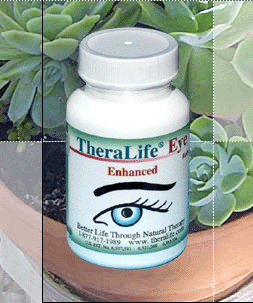
TheraLife Eye is an all natural oral formula that treats from inside out! It is uniquely formulated to restore normal cell functions to tear secretion glands intra-cellularly for sustainable, long lasting relief. Clinically proven to work for 80% of first time users.

To learn more: click here

ChronicSevereDEbundle

Watch a Video

Visit our Store

Dr-Button2Call and talk to a doctor toll free1-877-917-1989 US/Canada

(650) 949-6080 International
Send inquiries to:info@theralife.com
follow us on twitter and facebook.

Thursday, May 2, 2013

New Treatments for Meibomian Gland Dysfunction. TheraLife Can Help.

eye check up 121optometrists.co.uk
Meibomian Gland Dysfunction ( MGD)also known as posterior blepharitis, is quite common among people with dry eyes.  MGD is important to treat for several reasons.

1. Improve quality of life .
2.The abnormal lipids produced by MGD patients have a negative effect on the quality of the tear film, making tears easy to evaporate, which produces  discomfort and visual acuity problems

The typical treatments for MGD includes eye lid hygiene- using lid scrub, hot compresses twice a day, 10 minutes each time; the use of topical anti-biotics to keep eye infections away.

More recently, there is a new instrument on the market for unclogging meibomian glands - Thermal Pulsation System.

Thermal Pulsation treatment is clinically proven with sustained results. In a clinical study about 79% of patients reported an improvement in overall dry symptoms after a single Theramal Pulsation treatment. Depending on the severity of your specific condition and your response to treatment, you may need to repeat the Thermal Pulsation treatment periodically as your symptoms return over time.

The Challenge of Thermal Pulsation Treatment

Theramal Pulsation uses pulsed heat to dislodge and melt away the thick clogs in the meibomian glands.  However, people who receive this treatment may need to repeat it again incurring considerable out of pocket expenses.
The Thermal Pulsation + TheraLife Solution

The basic problem of MGD is  inflammation caused by dry eyes shut down tear secretion glands.  As long as dry eye symptoms persist, inflammation continues to shut down tear secretion glands.  This becomes a vicious cycle.

TheraLife Eye  normalizes and restores normal functions to tear secretion and interrupts this vicious cycle.  Once tear film becomes balanced, eyes are no longer dry, and more able to prevent MGD from happening again.

healthyeyebuttonUse TheraLife Eye after LipiFlow to restore normal functions to tear secretion glands which can produce balanced sustainble tears for soothing dry eye relief.  Continue to use Hot Compresses to keep the meibomian glands open and flowing. 

ChronicSevereDEbundle 
To learn more about MGD
Watch a video
Buy Now.
Scroll down to see all the selections.  

Dr-Button2
Call and talk to a doctor toll free 1-877-917-1989 US & Canada
Email: info@theralife.com
Follow us on twitter and facebook.

Friday, April 19, 2013

Tips for Dry Eye Relief and Workplace Stress

Workplace stress can cause changes in your body, your emotions , and induce chronic dry eyes.  Many of the familiar symptoms are:
  • Dry Eyes
  • Headache
  • Fatigue – feeling tired
  • Stiff Neck and Shoulder Pain
  • Back Pain
  • Sweaty Palms and Feet
  • Upset stomach
  • Depression
Chronic stress left untreated can lead to serious long term illnesses and decreased immune systems.  Some of these examples are:
  • chronic dry eye syndrome
  • heart diseases
  • chronic muscle pains
  • changes in hormone levels that lead to low fertility
  • weakening lung functions leading to catching colds and flu’s more easily,
  • asthma
  • obstructive lung diseases
  • worsening of skin problems like acne, eczema and psoriasis
Relationship between stress and dry eyes are well documented. 

We can understand this phenomena from how stress affects the circulatory system (How Does Stress Affect the Circulatory System. By Adrian Whittle). Stress causes the blood to produce hormones that increase the blood flow (increase blood pressure) and make blood thicker (causing strokes). As the heart is working harder, the micro-circulation of blood to the extremities such as skin, legs, and arms are decreased.
This decrease in blood supply may also include the brain and eyes. Eyes being connected to the brain already has a delicate blood circulation balance. Under stress, blood supply to the brain and eyes are both compromised, causing dry eyes.  Left untreated, this condition can become chronic. 

Learn more from:
http://www.ncbi.nlm.nih.gov/pmc/articles/PMC1446543/pdf/11211637.pdf
http://www.hse.gov.uk/stress/
http://www.stress.org/job.htm

healthyeyebuttonHow can TheraLife Help?
Theralife has 2 products that can help. TheraLife Eye and TheraLife Fatigue.
TheraLife Eye EnhancedTheraLife Eye works by stimulating the tear secretion to achieve balanced, sustainable tears from inside out. Learn more.
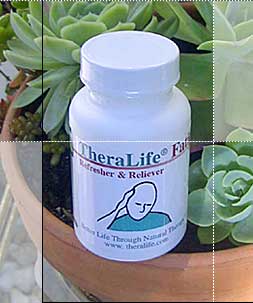
TheraLife FatigueTheraLife Fatigue delivers more oxygen to the brain, promotes alertness without caffeine, stay focused at work, and be able to sleep better at night. Learn more!
Which product is best for me?

 For those who have an existing dry eye condition and are already using TheraLife Eye Enhanced - try to increase the dosage. For those who would like to try TheraLife Eye Enhanced for Dry Eye, click here for additional information.

ChronicSevereDEbundle
Visit our Store
Watch a Video


Check out some of our all natural products for muscle pain relief:  Store Link

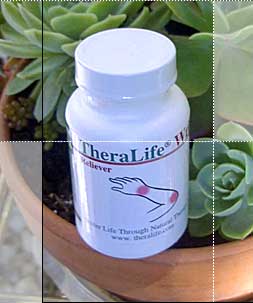
TheraLife WristTheraLife Wrist - carpal tunnel syndrome and wrist injuries
TheraLife Back and LegTheraLife Back and Leg
TheraLife Neck and ShoulderTheraLife Neck and Shoulder
Visit our online store
Dr-Button2 
Talk to a doctor, Call toll free: 1-877-917-1989 US & Canada
International: (650) 949-6080
Send inquiries to: info@theralife.com

Follow us at twitter        and Facebook

Thursday, April 18, 2013

Watery Eyes Can Be Caused By Dry Eyes- TheraLife Can Help

A large percentage of Watery Eyes can be caused by dry eyes- Read on.

Irritated Dry Eyes cause inflammation which in turn cause dry eye symptoms such as dry, irritable, sandy gritty, light sensitive, burning, blurry visions and more.  Eye drops often make the dry eyes worse.  Your brain starts to secrete Reflex Tears ( the tear you cry with)  in an attempt to lubricate your eyes.  This Reflex Tear is of poor quality- evaporates quickly, and thus cause your eyes to water even more.

How Can TheraLife Help?

To treat watery eyes caused by dry eyes, we first must relief and restore your tear secretion glands to produce normal balanced tears.  Once you experience dry eye relief, then your tear will eventually stop over production.  Watery dry eyes are harder to treat, and thus will take longer.

Here is a is a personal story from a TheraLife user:

"I have suffered for many years with severe watery and painful eyes.  Nothing I ever tried had worked.  I visited many eye specialists who told me to wash my eyes with salt solution and use various eye drops which only appeared to aggravate my eyes even more! I  am so pleased to have found Theralife. Initially I took TheraLife Eye capsules at 8 capsules per day for 2 months. Now I  have been taking 4 capsules a day now for about 2 years plus the Omega 3 Fish Oil.  This have made a huge difference to my dry eye problem. I don’t use eye drops anymore. I clean my eyelids thoroughly twice a day in the morning and evening to prevent blepharitis recurrence.  I am so delighted with Theralife Eye. Thank you again for your personal care and response. Yours sincerely
P.V.

ChronicSevereDEbundle
Learn more about watery dry eyes.

Watch a Video
Visit Our Store.  Scroll down to see all the selections.

Dr-Button2
 Call and talk to a doctor toll free 1-877-917-1989 from US & Canada
International (650) 949-6080
Follow us at twitter:  Facebook

Friday, April 12, 2013

Allergies and Dry Eyes- Tips for Relief from TheraLife

Allergy Dry Eyes


Spring is here and many of us are bothered by allergies, watery eyes, runny nose, headaches.  If you have dry eyes, you may experience worse symptoms.

For those already on TheraLife Eye, take additional capsules, TheraLife Eye has ingredients to combat mild to moderate allergies.  If needed, take either Claritin or Zertac- these are longer acting but less drying than the conventional anti-histmaines like Sudafed.

About 30 -50%  of the people who live in United States have allergy symptoms.  Nearly 75 % of those allergy symptoms affect the eyes.  In other parts of the world where the weather is dry, dusty and pollution is high, this statistics may even be higher.  Allergies can trigger other problems, such as conjunctivitis -pink eye(see section on red eyes) and asthma.

Symptoms of Dry Eyes and Allergy are often confused due to their similarities. For patients with existing dry eye conditions, allergies during spring and fall where pollen count is high become even more severe.

Some of the common symptoms are:
  • Red, swollen or itchy eyes – similar to dry eye symptoms
  • Runny nose; sneezing; coughing
  • Itchy nose, mouth or throat
  • Headache from sinus congestion
  • Fatigue from lack of sleep.
Allergy in additional to dry eyes often are presented with stronger symptoms of dry; itchy; red and watery eyes.  Itchy eyes are normally a result from allergy rather than classical dry eye conditions.  Some people have both symptoms all year around.

TheraLifeâ Eye Enhanced has natural botanical ingredients that relieve both Dry Eyes and Allergy Eyes.

Causes of Allergy Dry Eyes

Most allergens (agents that elicit allergy symptoms) are airborne. They come in contact with your eyes and nose. Airborne allergens include pollen, mold, dust and pet dander (cats and dogs in particular).  Some allergens like dust mites are embedded into carpets, drapery, bedding and window visors.  In that case, the allergens are triggering allergy and dry eyes all year round.
Conventional Treatments for Allergy Dry Eyes:
  • The most common treatment for allergy is anti-histamines for quick relief.   However anti-histamines cause dehydration, sleepiness, sometimes dizziness, and often are the causes for Dry Eyes.

  • Decongestant eye drops-, which constricts blood vessels in your eye to take the red out.  Long-term use can cause your eyes to become dependent on these eye drops, and when you stop, the blood vessels become even larger, making red eyes worse.
  • Non-steroidal anti-inflammatory drops can sooth allergy eyes (e.g. Patanol).  Its effect is longer term than anti-histamines.  It is effective in treating allergy eyes, but not dry eyes.
  • Prescription steroidal eye drops provide quick relief.  However, long term use have been associated with side effects such as increased inner  eye pressure(intraocular pressure) leading to glaucoma and damage to optic nerve. Steroids also have been known to cause cataracts. Prescription steroid eye drops are normally used for very severe cases and no longer than one month.


1. TheraLife Eye Enhanced?
TheraLife Eye Enhanced is an all-natural botanical product that does not have some of the side effects of anti-histamines (dehydration, dizziness, fatigue and Dry Eyes) or drugs.  TheraLifeâ Eye Enhanced has ingredients that relieve symptoms of Allergy Eyes as well as Dry Eyes. For more information, see TheraLifeâ Dry Eye Benefits below:

2.  Allergy medications- we recommend Claritin – a mast cell stabilizer.
3.  Use a Hepa filter air cleaner

4. Leave outer clothing and shoes outside before coming into the house to avoid tracking allergens indoors.
DO NOT USE ANTIHISTAMINES – e.g. Benydryl, Claritin D

For additional information; please visit National Eye Institute:  nei.gov/

ChronicSevereDEbundle
To learn more

Video
Visit Our Store.  Scroll down to see all the selections.

Dr-Button2
Call and talk to a doctor toll free 1-877-917-1989 US & Canada
International (650) 949-6080
Follow us on twitter
facebook

Thursday, March 28, 2013

Fish Oil in Dry Eyes & MNeibomian Gland Dysfunction Treatments

fishoil 

Omega 3 Fish Oil is often recommended for dry eye relief.

Omega 3 Fatty Acids Fish Oil (or Flaxseed Oil)  is not sufficient to relief chronic dry eye symptoms.  Why?

Read on.  See if your diet patterns lead to a healthier you.

Omega 3 Fish Oil has strong anti-inflammatory properties that fights inflammation in people with dry eyes.  In addition, it also thickens the tear in cases where tear viscosity is too low, resulting in evaporative dry eyes. 

One of the main reasons why Omega 3 Fatty Acids alone is not enough is because inflammation from dry eyes resulted in under-active tear secretion glands.  Only TheraLife Eye can restore and activate tear secretion glands and make them secrete balanced tears again.

People with chronic dry eye syndrome suffer from discomfort such as dry, painful, sandy gritty, tired, stinging symptoms with eyes that maybe very light sensitive.   These symptoms can be . stubbornly persistent even with conventional dry eye remedies such as eye drops, punctal plugs, and more.   The more one uses eye drops, the drier the eyes becomes.  Drops wash away the natural lubricants the eye produces.

There is a great amount of interest in the use of essential fatty acids (EFAs) as an adjunct in the treatment of chronic dry eye symptom.  In heart diseases, Essential Fatty Acids, such as those in TheraLife Omega 3 Fish Oil have been shown to play a role in inflammatory processes leading to improved changes to the heart.  The cause of dry eye is often inflammatory in nature, therefore, the anti-inflammatory actions of Omega 3 Fish Oil can really help people with chronic dry eye syndrome.

Foods and supplements containing Omega 3  are used to relief dry eye syndrome.  In North America, the diets are known to be very low in omega-3 essential fatty acids.  Omega 3 Fatty Acids are believed to be beneficial for maintaining normal tear production.

The two best sources of omega-3s are:
  1. dark, oily, cold-water fish
  2. flaxseed.
They are known to have many health benefits, yet, as a population, people in developed countries  are omega-3 deficient. In fact, Americans' dietary intake of omega-3s is among the lowest in the world.

What is the difference between Omega 3 and Omega 6 Fatty Acids?

Omega-6s (the bad fatty acid) can promote dry eye syndrome.  Omega 3 fatty acids can help relief dry eye syndrome.

Too much Omega 6, not enough Omega 3

People living in developed countries, especially Americans obtain an excess of omega-6s through their consumption of beef, dairy, vegetable shortening and cooking oils (i.e. hamburgers, cheeseburgers, pizza, ice cream, potato chips, etc.). It is thought that intake ratio of omega-3 to omega-6 fatty acids ideally should be at least 1:4 and preferably 1:2.3. However, the ratio is typically much lower in a diet typical of developed countries which tends to be high in meat and processed food. In one study, a high intake ratio of omega-3 to omega-6 fatty acids resulted in a decreased likelihood of suffering from dry eye syndrome, while women with lower than a 1:15 omega-3/omega-6 fatty acids ratio had a 2.5 times greater prevalence of dry eye syndrome. If too much omega-6 fatty acid is ingested due to a diet high in processed meats and low in unprocessed oils and omega-3 fatty acids, then increased levels of pro-inflammatory prostaglandin E2 (PGE2), and low levels of anti-inflammatory agents PGE1 and PGE3, may lead to dry eye. The effectiveness of essential fatty acids as a treatment for dry eye syndrome is dependent on the proper balance of omega-6 and omega-3 fatty acids.

Omega 3 fatty acid help reduce Meibomian Gland Dysfunction (MGD).

The effectiveness of fatty acid treatment of dry eye syndrome is also dependent on specific nutrient co-factors that help the metabolic conversion to anti-inflammatory prostaglandins. These nutrient co-factors stimulate the production of healthy goblet cells and enhance production of clearer and thinner meibomian gland secretion. Omega-3 fatty acids also play an important role in the synthesis of meibum, the oil secreted by meibomian glands. People with omega-3 fatty acid deficiency typically have a thicker meibomian gland secretion. The use of omega-3 fatty acid supplements results in clearing and thinning of meibomian gland secretions which in turn improves symptoms of dry eye. Properly designed formulations also encourage lacrimal gland secretion and the production of tear lactoferrin.

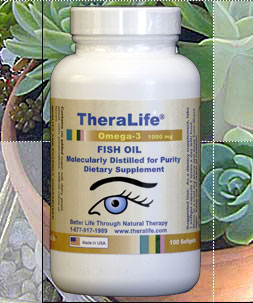
TheraLife® Omega-3 Fish Oil- Molecularly Distilled

TheraLife®Dry Eye Enhanced and TheraLife® Omega-3 Fish Oil taken together provides added benefits
  • Reduce chronic inflammation from dry eye conditions.
  • Produces a better quality tear that prevents excessive tear evaporation.
  • Reduce risk of Macular Degeneration, Cataract and other various age related eye disorders.
  • Omega-3's benefit other regions of the body including the brain, immune system, cardiovascular system and the skin.
Since the year 2000, TheraLife® Dry Eye Enhanced has successfully treated the dry eye conditions of thousands of satisfied customers.  For moderate to severe dry eye conditions,TheraLife recommends the use Omega-3 Fish Oils in conjunction with TheraLife® Eye Enhanced to treat their dry eye symptoms.  Because of our growing concern of the quality of fish oil products in the market place, we have decided to sell our own brand of Omega-3 Fish Oils.

TheraLife® Omega-3 Fish Oil is molecularly distilled to reduce levels of mercury and other contaminants. We provide the highest levels of
  • Quality
  • Purity
  • Potency
To learn more: click here

Learn More

Video

Visit Our Store.
Scroll Down To See All The Selections.


Call and talk to a Doctor toll free 1-877-917-1989 US & Canada
International  (650) 949-6080
Follow us on twitter and facebook.

Tuesday, March 26, 2013

New Research Leads to New Approaches to Dry Eye Treatments & Managements

“The more we learn about dry eye, the more we need to understand and use the appropriate treatment for different disease entities”. 

Dry eyes are classified as Ocular Surface Disease.  Today’s eye doctors are faced with a great deal of uncertainty. Options for treatment are actually getting more restricted due to domination by prescription drugs which increased the cost of dry eye treatment in recent years by many folds.  The default treatment by eye drops no longer work.

It is well known that frequent use of eye drops make your eyes drier.

What do we know about tear film and mucin?
Some of the new research in dry eye made a big difference in our understanding of dry eye disorder. For example, the tear film, once thought to be 7µm in thickness and three layers thick (mucin, aqueous and lipid), it is now generally accepted the tear film is 3µm-to-4µm thick, and there are two layers: a mucin-aqueous gradient “gel” and a lipid layer.  This changed our ability to accurately measure tear film thickness with interferometric techniques, which have been confirmed with anterior segment OCT scanning.

We also now have a better understanding of mucins—MUC 16 is not a membrane-bound mucin and therefore, is mobile and capable of forming a gradient in the aqueous layer. This allows the formation of “crusty” build up on eye lids - Blepharitis.

How  mucin plays a role in the health and disease of the ocular surface is still do not well  understood, but new research providing insight does increase our knowledge of mucin biology to better manage dry eye syndrome.

Today’s Patients Are More Informed, and Demand Better Answers!

Today, consumers are more knowledgeable and want better answers.   Direct-to-consumer marketing, the Internet and education all result in increased awareness of disease states by both patients and clinicians.  Doctors are influenced by supportive science for therapeutics, clinician practice patterns, education and peers. Doctors are trained a certain way in medical schools, and tend to stay with the way they were taught- slow to change. However, today’s patients demand more. Patients in this case, can be a great asset and advocate to their doctors -provide them with more options! TheraLife 's natural remedies is one of these new approaches that do not fit the traditional way of thinking.
What is Ocular Surface Disease? 

Ocular Surface Disease is composed a family of conditions impacting the front of the eye. Terms such as blepharitis, meibomian gland disease or dysfunction (MGD), keratoconjunctivitis sicca, meibomitis, and meibomian keratoconjunctivitis, among others, led to the concept of dry eye disease and no less than 10 different classification schemes for some component of dry eye or blepharitis through the years.

How to Diagnose Dry Eye?
The problem is there is no single accepted diagnostic test for dry eye and the tests.  What tests are done often correlate poorly with symptoms. It is suggested that doctors ask a series of questions in addition to some of the more accepted conventional tests for dry eyes:
  • Schirmer’s Test –to measure tear volume
  • Tear Breakup Test- to determine tear viscosity
Your eye doctors should: 

1. Ask about symptoms. Have the patient describe in his/her own words how his/her eyes feel, when they feel the worst and how it is impacting his/her life. Record this information, and refer to it at follow-up visits. Note current treatments, including frequency of application.

2. Look at the lids. Twenty years ago, we looked at the lids, but at some point, we stopped. Start to express the meibomian glands- squeeze fluid out. If you see a blocked gland on slit-lamp evaluation in symptomatic patients with quiet lids, you will be surprised by what you find. Be patient—press, move laterally, press, move back, re-press. Look at the quality of the secretions, and record your description.

3. Stain. Most practitioners use fluorescein to assess tear break-up and staining of the cornea. Wait at least one minute before fully evaluating corneal staining. Believe me, you will see more. Then, use lissamine green, and again, wait a minute or two before you observe the ocular surface. This dye takes time to color mucin and devitalized cells. A band-like pattern across the inferior third of the cornea usually means either incomplete blink or possible MGD. A new product, Fluramene (Noble Vision Group), can do the job of both staining agents with one drop.

4. Follow up. This takes valuable chair time, but is worth it in the long run. Recently, there has been a lot of discussion among clinicians with dry eye clinics about the best time to follow-up on a dry eye or MGD patient.

Get Your Doctor to Take Time for You Your doctor should take time to do the proper medical exam and provide sufficient information for you why certain decisions are made.

We hear all too often that the doctors are doing the minimal, do not take time to explain to the patients what is going on with their debilitating dry eye conditions – leading to much frustrations on both patients and doctors.

TheraLife follows up with you until you recover.  We provide the best customer support in this industry.  Get your life back on track and get relief today.

Don't Let Chronic Dry Eye Ruin Your Life:
Put your Life Back On Track with TheraLife Eye!
Clinically Proven- 80% Success with First Time Users. Doctors Recommended!
Find out more: click here

Learn More

Video

Visit our Store


Call and talk to a doctor toll free 1-877-917-1989 US and Canada:
International Country Code + (650) 949-6080
Send inquiries to: info@theralife.com
Follow us at : twitter and facebook