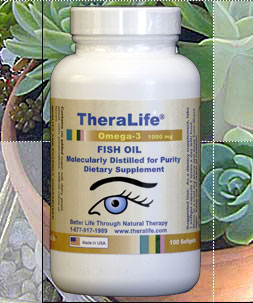
“The
more we learn about dry eye, the more we need to understand and use the
appropriate treatment for different disease entities”.
Dry
eyes are classified as Ocular Surface Disease. Today’s eye doctors are
faced with a great deal of uncertainty. Options for treatment are
actually getting more restricted due to domination by prescription drugs
which increased the cost of dry eye treatment in recent years by many
folds. The default treatment by eye drops no longer work.
It is well
known that frequent use of eye drops make your eyes drier.
What do we know about tear film and mucin?
Some
of the new research in dry eye made a big difference in our
understanding of dry eye disorder. For example, the tear film, once
thought to be 7µm in thickness and three layers thick (mucin, aqueous
and lipid), it is now generally accepted the tear film is 3µm-to-4µm
thick, and there are two layers: a mucin-aqueous gradient “gel” and a
lipid layer. This changed our ability to accurately measure tear film
thickness with interferometric techniques, which have been confirmed
with anterior segment OCT scanning.
We also now have a better
understanding of mucins—MUC 16 is not a membrane-bound mucin and
therefore, is mobile and capable of forming a gradient in the aqueous
layer. This allows the formation of “crusty” build up on eye lids -
Blepharitis.
How mucin plays a role in the health and disease of
the ocular surface is still do not well understood, but new research
providing insight does increase our knowledge of mucin biology to better
manage dry eye syndrome.
Today’s Patients Are More Informed, and Demand Better Answers!
Today,
consumers are more knowledgeable and want better answers.
Direct-to-consumer marketing, the Internet and education all result in
increased awareness of disease states by both patients and clinicians.
Doctors are influenced by supportive science for therapeutics, clinician
practice patterns, education and peers.
Doctors are trained a certain way in medical schools, and tend to stay with the way they were taught- slow to change.
However, today’s patients demand more. Patients in this case, can be a
great asset and advocate to their doctors -provide them with more
options! TheraLife 's natural remedies is one of these new approaches
that do not fit the traditional way of thinking.
What is Ocular Surface Disease?
Ocular
Surface Disease is composed a family of conditions impacting the front
of the eye. Terms such as blepharitis, meibomian gland disease or
dysfunction (MGD), keratoconjunctivitis sicca, meibomitis, and meibomian
keratoconjunctivitis, among others, led to the concept of dry eye
disease and no less than 10 different classification schemes for some
component of dry eye or blepharitis through the years.
How to Diagnose Dry Eye?
The
problem is there is no single accepted diagnostic test for dry eye and
the tests. What tests are done often correlate poorly with symptoms. It
is suggested that doctors ask a series of questions in addition to some
of the more accepted conventional tests for dry eyes:
- Schirmer’s Test –to measure tear volume
- Tear Breakup Test- to determine tear viscosity
Your eye doctors should:
1.
Ask about symptoms. Have the patient describe in his/her own words how
his/her eyes feel, when they feel the worst and how it is impacting
his/her life. Record this information, and refer to it at follow-up
visits. Note current treatments, including frequency of application.
2.
Look at the lids. Twenty years ago, we looked at the lids, but at some
point, we stopped. Start to express the meibomian glands- squeeze fluid
out. If you see a blocked gland on slit-lamp evaluation in symptomatic
patients with quiet lids, you will be surprised by what you find. Be
patient—press, move laterally, press, move back, re-press. Look at the
quality of the secretions, and record your description.
3. Stain.
Most practitioners use fluorescein to assess tear break-up and staining
of the cornea. Wait at least one minute before fully evaluating corneal
staining. Believe me, you will see more. Then, use lissamine green, and
again, wait a minute or two before you observe the ocular surface. This
dye takes time to color mucin and devitalized cells. A band-like pattern
across the inferior third of the cornea usually means either incomplete
blink or possible MGD. A new product, Fluramene (Noble Vision Group),
can do the job of both staining agents with one drop.
4. Follow
up. This takes valuable chair time, but is worth it in the long run.
Recently, there has been a lot of discussion among clinicians with dry
eye clinics about the best time to follow-up on a dry eye or MGD
patient.
Get Your Doctor to Take Time for You Your doctor should take
time to do the proper medical exam and provide sufficient information
for you why certain decisions are made.
We hear all too often that
the doctors are doing the minimal, do not take time to explain to the
patients what is going on with their debilitating dry eye conditions –
leading to much frustrations on both patients and doctors.
TheraLife
follows up with you until you recover. We provide the best customer
support in this industry. Get your life back on track and get relief
today.

Don't Let Chronic Dry Eye Ruin Your Life:
Put your Life Back On Track with TheraLife Eye!
Clinically Proven- 80% Success with First Time Users. Doctors Recommended!
Find out more:
click here

Video

Call and talk to a doctor toll free 1-877-917-1989 US and Canada:
International Country Code + (650) 949-6080
Send inquiries to: info@theralife.com
Follow us at :
twitter and
facebook


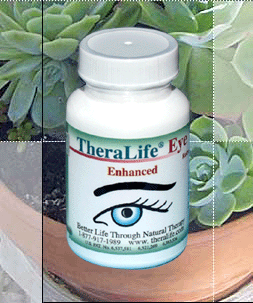 TheraLife Eye works by stimulating the tear secretion to achieve balanced, sustainable tears from inside out. Learn more.
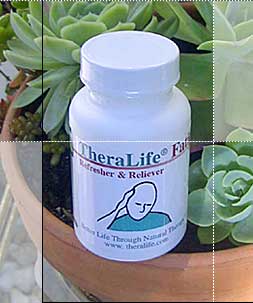 TheraLife Fatigue
delivers more oxygen to the brain, promotes alertness without caffeine,
stay focused at work, and be able to sleep better at night. Learn more!
TheraLife Fatigue
delivers more oxygen to the brain, promotes alertness without caffeine,
stay focused at work, and be able to sleep better at night. Learn more!
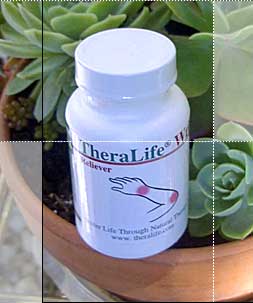 TheraLife Wrist - carpal tunnel syndrome and wrist injuries
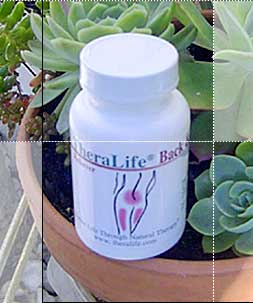 TheraLife Back and Leg
 TheraLife Neck and Shoulder