Showing posts with label menopause dry eyes. Show all posts

Monday, May 15, 2017

Treatments & Causes for Watery Eyes- Aging Eyes


Treatments & Causes for Watery Eyes - Aging Eyes.


Dry eyes are one of the most common problems among seniors as they age. With age, our eyes and body are undergoing a variety of changes. Decreased cardiac function results in decreased micro-circulation which leads to poor supply of blood and nutrients to the eye. If dry eye is left untreated, the cornea can develop ulcers as well as other severe eye problems.

Causes of Aging Dry Eyes

As we age, our body produces fewer tears. Dry eyes are a very common complaint among older adults. Here are a few of the different causes that influence our dry eyes:
  • Watery Eyes- Ironically, dry eyes can cause watery eyes because the body senses the amount of fewer tears which triggers the brain to produce reflex tears (excessive watery tearing). This excessive tearing however does not lubricate your eyes it only makes the problem worse.
  • Menopause- Hot flashes, insomnia, vaginal dryness, mood swings, fatigue, headaches are all associated with menopause. However, more than 60% of women experiencing these symptoms also experience dry eyes. Women at this stage are also vulnerable in developing autoimmune diseases like Sjogren’s syndrome; Rheumatoid Arthritis (see section under TheraLife Eye Enhanced – Autoimmune Dry Eyes.)
  • Tear Production- As we age, our eyes naturally slow down the tear production process. Tears are a major protective agent for the eyes. Tears not only wash away dust from our eyes, but also soothe our eyes, provide oxygen and nutrients to the cornea, as well as help defend against eye infections by removing microorganisms that can form communities in our eyes.
  • Medications- Medications can cause dry eye. This includes some medications, antidepressants, antihistamines, muscle relaxants, sleeping pills, and pain relievers. Natural therapy sometimes tends to be a more balanced approach to aging diseases.
  • Caffeine in foods- Coffee, tea, sodas and chocolates are some of our everyday indulgences that contain caffeine. Caffeine causes blood vessels to constrict which results in decreased circulation, cause insomnia, and a variety of health issues. Try avoiding these foods and drinks if possible as caffeine is known to dehydrate the body.
  • Computer use- Internet allows us to connect with the outside world. Sitting in front of the computer for extended periods of time can significantly dry your eyes out. Remember to blink more often.

Prevention Measures as You Age

We strongly recommend the following things you can do to help prevent and relieve the severe symptoms of Dry Eye, regardless of your age. Here are a few examples:
  • Drink Water- At least 8 glasses a day. Water is a great source to keep your body hydrated, especially if you live in dry, hot or cold climates.
  • Humidifiers- Either in your central heating system or individual rooms inside your home can bring moisture into the air, especially if you live in a dry location, or during winter when there is less moisture in the air.
  • Natural Supplements- Omega-3’s (especially fish oil) and Omega 6’s is a great way to help you thicken your tears and decrease your dry eye symptoms. For women, adding Primrose Oil to Fish Oil can also help with hormone balance.


How can TheraLife Eye Help?


Your eyes are watery because you had dry eyes for a long time.  Unfortunately, your crying tears is of poor quality, washing your eyes clean of lubricates that thicken the tears.

TheraLife Eye works by restoring normal cell functions to tear secretion glands and increase normal tear production to relief dry eyes.  It is the only formula that can stop tear over production. It takes 3 months to stop watery dry eyes.

To learn more: click here
Watch a video
Visit our store: 


Call and talk to a doctor toll free: 1-877-917-1989 US/Canada
International (650)949-6080

Email inquiries to: info@theralife.com
Follow us on twitter and facebook.

Wednesday, August 17, 2016

Dry Eye Relief When Drops Don't Work


Dry Eye Relief When Drops Don't Work


Eye Drops are Not Enough - Risk Factors for Chronic Dry Eye Syndrome. What you have to lose when not treated.
There are numerous risk factors for dry eye syndrome:  include but not limited to:

1.      Women in menopause

Menopause women who receive hormone replacement therapy are at higher risk.  Postmenopausal women who use hormone replacement therapy, especially estrogen, have a higher prevalence of dry eye syndrome compared with those who have never used hormone replacement therapy.  In clinical experience, both menopausal and postmenopausal women tend to have dry eye symptoms; this can be attributed to the significant decrease of tear production around the sixth decade of life in women.4  Similarly, it has been noted that women with primary ovarian failure develop clinically significant dry eye syndrome.
 

3.      Medications - 


Medications such as diuretics (to lower high blood pressure) , antidepressants, antihistamines, anticholinergics, and systemic retinoids like Accutane
 can increase the risk of developing dry eye syndrome.
 
4.      Environmental factors,

Such as reduced humidity and increased wind, drafts, air conditioning, or heating may worsen the ocular discomfort of patients with dry eye.  Exogenous irritants and allergens, although not believed to be causative of dry eye, can certainly increase the symptoms of dry eye syndrome in patients, as can extended visual tasking during computer use, television watching, and prolonged reading.
 
5.      LASIK or PRK Surgery:

Following refractive surgery such as laser-assisted in situ keratomileusis (LASIK) or photorefractive keratectomy (PRK), patients for several months may experience significant dry eye due to the severing of the corneal nerves during surgery.
6.      Systemic Diseases:  Sjogrens, Blepharitis, Lymphoma, Viral Infections, AIDS …

Dry eye-associated systemic diseases include Sjögren's syndrome, where inflammation of the lacrimal gland leads to tear-production deficiency, and rosacea, which is associated with posterior blepharitis with increased tear evaporation.  Aqueous tear deficiency may develop in systemic pathologies such as lymphoma, sarcoidosis, hemochromatosis, and amyloidosis. Dry eye may likewise develop in patients with systemic viral infections
 and AIDS.  Lacrimal gland swelling, dry eye, and Sjögren’s syndrome have been associated with Epstein-Barr virus infections and decreased tear production, reduced tear volume, and reduced tear lactoferrin concentrations have been seen in patients with hepatitis C. Neuromuscular disorders that affect the patient’s blink (e.g., Parkinson disease, Bell palsy) can lead to dry eye syndrome as can localized findings such as eyelid malposition, lagophthalmos, and blepharitis.  
7.      Cancer Treatments

Radiation, Transplantation, Localized trauma, including orbital surgery, radiation, and injury, may also cause dry eye.
You can see from all the research into the risk factors of DED that we need to go beyond just dispensing some artificial tear to our DED patients.  We need to look into the lifestyle of our patients to insure we address the underlying issues our patients may have.  It is the first step to insure success in DED treatment.


TheraLife Can Help
Theralife Eye 

An alternative is to try an oral system that help your tear glands secret your own tears naturally throughout the day.

TheraLife Eye capsules are formulated to be taken orally. It is unique because it targets tear secretion through intra-cellular mechanisms (internal cell functions). Once the person have been on TheraLife Eye and feel relief, they can also bring the capsules with them when doing outdoors activities being exposed to sun and wind. Simply take a few more capsules in addition to the regular dosage when eyes feel dry again. Usually the relief comes within 20-30 minutes. Give TheraLife Eye a try.

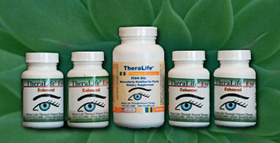
Chronic Dry Eye Bundle
Check out our Discount Bundle Packages
Doctor's Recommended.
80% Success for first time users.
All natural, effective and safe!

Watch a video


Call and talk to a doctor toll free 1-877-917-1989 in United States and Canada
International 650-949-6080

Don't forget to follow us on twitter! and facebook

REFERENCES
  1. American Academy of Ophthalmology Cornea/External Disease Panel. Preferred Practice Pattern® Guidelines. Dry Eye Syndrome. San Francisco, CA: American Academy of Ophthalmology; 2008. 
  2. Moss SE, Klein R, Klein BE. Prevalence of and risk factors for dry eye syndrome. Arch Ophthalmol 2000; 118: 1264-8.
  3. Schaumberg DA, Buring JE, Sullivan DA, et al. Hormone replacement therapy and dry eye syndrome. JAMA 2001; 286: 2114-9.
  4. Lambert DW, Foster CS, Perry HD. Schirmer test after topical anesthesia and the tear meniscus height in normal eyes. Arch Ophthalmol 1979; 97: 1082–1085.
  5. Smith JA, Vitale S, Reed GF, et al. Dry eye signs and symptoms in women with premature ovarian failure. Arch Ophthalmol 2004; 122: 151–156.
  6. Seedor JA, Lamberts D, Bergmann RB, Perry HD. Filamentary keratitis associated with diphenhydramine hydrochloride (Benadryl). Am J Ophthalmol 1986; 101: 376-7.
  7. Bergmann MT, Newman BL, Johnson NC Jr. The effect of a diuretic (hydrochlorothiazide) on tear production in humans. Am J Ophthalmol1985; 99: 473-5.
  8. Schlote T, Kadner G, Frudenthaler N. Marked reduction and distinct pattern of eye blinking in patients with moderately dry eyes during video display terminal use. Graefes Arch Clin Exp Ophthalmol. 2004; 242: 306–312.
  9. Ang RT, Dartt DA, Tsubota K. Dry eye after refractive surgery. Curr Opin Ophthalmol. 2001; 12: 318–322.
  10. Donnenfeld ED, Ehrenhaus M, Solomon R, et al. Effect of hinge width on corneal sensation and dry eye after laser in situ keratomileusis. J Cataract Refract Surg. 2004; 30: 790–797.
  11. Drosos AA, Constantopoulos SH, Psychos D, et al. The forgotten cause of sicca complex; sarcoidosis. J Rheumatol 1989; 16: 1548-51.
  12. Fox RI. Systemic diseases associated with dry eye. Int Ophthalmol Clin1994; 34: 71-87.
  13. Itescu S. Diffuse infiltrative lymphocytosis syndrome in human immunodeficiency virus infection - a Sjogren's-like disease. Rheum Dis Clin North Am 1991; 17: 99-115.
  14. Lucca JA, Farris RL, Bielory L, Caputo AR. Keratoconjunctivitis sicca in male patients infected with human immunodeficiency virus type 1.Ophthalmology 1990; 97: 1008-10.
  15. Merayo-Lloves J, Baltatzis S, Foster CS. Epstein-Barr virus dacryoadenitis resulting in keratoconjunctivitis sicca in a child. Am J Ophthalmol 2001; 132: 922-3.
  16. Siagris D, Pharmakakis N, Christofidou M, et al. Keratoconjunctivitis sicca and chronic HCV infection. Infection 2002; 30: 229-33.
  17. Deuschl G, Goddemeier C. Spontaneous and reflex activity of facial muscles in dystonia, Parkinson's disease, and in normal subjects. J Neurol Neurosurg Psychiatry 1998; 64: 320-4.


Thursday, April 12, 2012

Menopause and Dry Eyes-Homrone Changes, Inflammation and More!

 
 Hormonal changes and dry eyes


Hormone Recetors found on on Cornea-

The degree to which your hormones affect your eye health depends largely on your individual blueprint and lifestyle. However, studies have linked androgen (testosterone) and estrogen receptors on the cornea of the eye and on the meibomian gland. This indicates a correlation between the production of tears and our sex hormones.

Dry Eye and “Inflammation”.

When your eyes stay dry for too long, the result is localized inflammation. This immune response releases all kinds of inflammatory substances which make your eyes red, itchy, and swollen. The appearance of dry eyes often coincides with other signs of “drying” in menopause, like sore joints and dry vaginal tissues. Restoring a natural internal balance between estrogen, progesterone and testosterone is an important remedy for dry eyes. Though this is something we rarely hear about in a conventional eye doctor’s office, or other imbalances that may be contributing to the condition..
symptoms of dry eye can be an important warning sign that your body’s detox capabilities are on overload. And what happens when you aren’t detoxifying efficiently?. While no clinically controlled study as of yet has linked the localized inflammation of dry eye to systemic low-grade inflammation
Moreover, the inflammation connection is being supported by the growing trend among conventional eye doctors to add omega-3 supplements or fish oil to their standard dry eye treatment protocol. A recent study reported that women with a diet rich in omega-3 fatty acids reduced their risk of dry eye by 20% compared to women with low levels of omega–3.

Omega 3 Fish Oil and Inflammation-

Increasing your intake of omega-3 fatty acids( Fish Oil) in supplements or by eating fish like mackerel, tuna, or wild salmon or certain nuts and seeds — does several things that benefit the eye by benefiting your entire body. For one, they have been shown to naturally moderate inflammation. They also aid in the stimulation of tear secretion and increase the oils in that secretion. Additionally, they may moderate excess estrogen production. And all of these benefits get at the root of dry eyes by providing natural lubrication rather than temporary “artificial” relief.

Conventional dry eye treatments and “artificial tears

The most common conventional treatment for dry eye is drops or “artificial tears” that temporarily relieve symptoms by restoring fluid to the eye. These drops can be invaluable in the short term for many people with dry eyes by making it comfortable to blink. The unfortunate side of drops, though, is that they offer only temporary relief of dry eye symptoms, not a systemic response that helps prevent recurrences.

If your symptoms of dry eye are really bothering you, it’s worth finding some soothing drops to use while you pursue other long-term approaches that may take more time to kick in. The ingredients and viscosity of drops vary a lot, so you may need to try a few; be sure to ask your practitioner for samples. When buying, remember that preservatives irritate some eyes, and drops designed to “get the red out” are not designed for dry eyes.

Using drops is like pouring water into a dry well instead of looking for a new spring — to find permanent relief.  Theralife Can Help- See Below

Relief for dry eyes:  Nutrition and Restore Hormone Balance

Every body is unique so you may need to experiment to find a combination of changes that work for you.  Supplemental essential fatty acids, in addition to a highly nutritious diet, are helpful for women of all ages with dry eyes.

A. Optimize your nutrition. Eat three balanced meals a day, consisting of:
1.   whole foods
2.    daily multivitamin.
3.  Omega 3 fatty acid  - be sure it is free of Mercury and PCB contamination- e.g TheraLife Omega 3 Fish Oil
4.   Vit E- which helps Omega 3 functionality

B. Balance your hormones.

Gentle endocrine support can help the body generate its natural levels of estrogen, progesterone and testosterone. You may also notices that some simple dietary changes, like eating more whole grains and less sugar and processed foods can help control insulin levels and reduce chronic inflammation.

C.  Evaluate your medications. If you are on medication, speak with your doctor about the possibility of it contributing to your dry eyes. There may be alternatives that cause fewer side effects.

D.  Avoid excessive pollution and other irritants. – Quit Smoking
Here’s another great reason to quit smoking: smoke aggravates dry eyes. Also, try to avoid rubbing your eyes since it can disturb tear film, remove moisture, and introduce bacteria or irritants into the eye. Try to buy hypoallergenic make-up as well.

E.  Hydrate and humidify.  6-8 glasses of water or fluids per day. Use Humidifier
Dehydration can draw fluid from the eyes, so remember to drink plenty of fluids. Non-diuretic drinks like water, pure juices, milk and herbal teas are good choices for hydration. You may also try using a humidifier to reduce tear evaporation, but be sure to clean it daily with soap to avoid introducing more irritants into the air.

F.  Blink!

Try to blink at least every five seconds or so, particularly when looking at your computer screen. It may also be helpful to lower your computer monitor a bit so your eyelids cover more of your eyeballs while you look at it.

G.  Practice care with contact lenses.

Contacts can sap the eye’s fluid and collect proteins, irritating eyes further with roughness and an environment conducive to growing bacteria. Keep lenses very clean, consider wearing them less, or explore lenses designed for dry eyes. Not all drops can be used with contacts, so check the labels. TheraTears makes a product specifically designed for contact wearers with dry eyes.

H.  Get more sleep!

Last but definitely not least: enjoy the anti-inflammatory benefits of regular sleep! Beyond giving your eyes a chance to rest and refresh, good quality sleep reduces stress that can contribute to hormonal imbalances. Our bodies detoxify and attend to much needed cellular repair while we sleep, which helps soothe inflammation in all systems.

To learn more about menopause dry eyes: click here and video

 
TheraLife Eye- Restore Normal Cell Functions to Tear Secretion Glands Intra-cellularly. 


Visit Our Store

Doctor's Recommended
80% success first time users.
TheraLife Eye+ Menopausal Support + Omega 3 Fish Oil

Why TheraLife Menopausal Support?
TheraLife Menopausal Support is all natural. Key ingredient- Soy Isoflavon is a hormone like substance proven to relief menopause symptoms.


Follow us at:
twitter
facebook